Lashar Valley – Nomadic Herdsmen Festival
Nov 29, 2023


Log in to your Account
Share


Dong Valley, located in the remote Anjaw district of Arunachal Pradesh, is a breathtaking paradise surrounded by dense forests and majestic mountains. Nestled near the tri-junction of India, China, and Myanmar, Dong is the easternmost village in India and the first place in the country to receive sunlight every morning.
Perched at an altitude of 1,240 meters (4,070 feet), Dong lies near the confluence of the Lohit River and the Sati Stream. Just 6 km from the town of Walong, the village is primarily inhabited by the resilient Meyor tribe, known for their unique culture and warmth. The terrain of Dong Valley is characterized by steep mountains, lush valleys, and verdant forests. The valley is cut through by the mighty Lohit River, which is a major tributary of the Brahmaputra, creating a stunning landscape. The horizon is dominated by towering peaks, including the prominent Yaang Tepha, which adds to the awe-inspiring panorama.
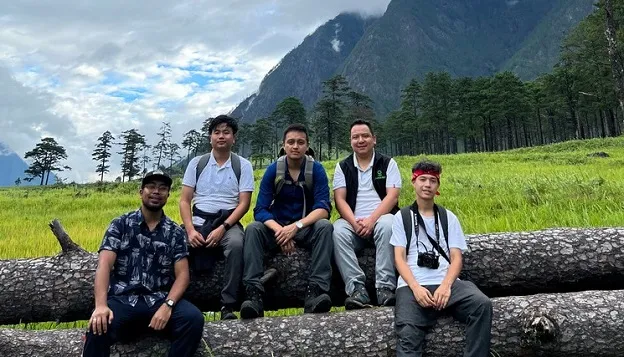
Team OurGuest was enamoured by this charming village at the extreme easternmost village of India, Dong - a location as unheard of in the offbeat travel circuit. Imagine standing atop a lush hill, surrounded by dense forests and towering mountains, as the first rays of sunlight in India paint the sky in hues of gold and pink. This is the magic of Dong Valley, a remote paradise in Arunachal Pradesh, often called the "Land of the Rising Sun." Our journey to witness India’s first sunrise was an adventure filled with beautiful landscapes, cultural encounters, and a humbling connection with nature. For travelers seeking offbeat adventures and cultural immersion, Dong Valley is a gem waiting to be discovered.
Trek Distance: Approximately 8 kms (two ways)
Start Time: 2:00 AM from Walong, reach summit by 4:00 AM
Duration: 90 minutes (moderate to challenging)
The trek begins at 3 AM and rewards trekkers with an unforgettable panoramic view as the first rays of sunlight pierce through the eastern Himalayas. The summit is a serene meadow, perfect for reflection and photography.
Dong isn’t just about sunrises. The region offers a mix of natural beauty, local culture, and rare wildlife encounters.
Scattered across the valley, these warm springs offer therapeutic relief after a long trek.
Birdwatchers and wildlife lovers can glimpse species like:
Stay in local homestays in Walong and participate in the daily life of the Meyor people to experience their customs, cuisine, and warmth.
With minimal light pollution, Dong is a stargazer's paradise. Don’t forget your tripod and camera.
If you're planning a trip to Dong, there are several fascinating places that you can visit along the way.
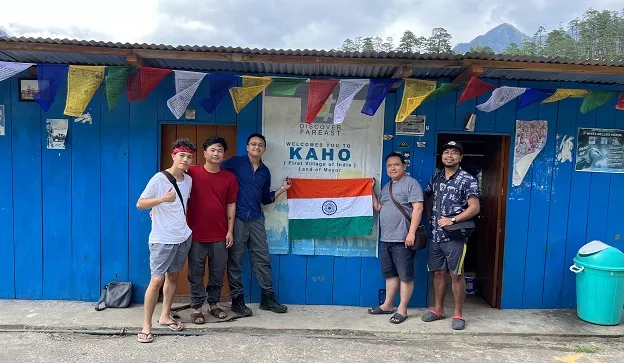
One cannot help but be amazed at life in the region where there is no phone connectivity till date, and the locals have walkie talkie radio sets provided by the armed forces, through which they communicate.
Now picture this, when you book a stay or a trip with us for this location, our reservation team will contact a family member of the Homestays at Kibithoo, at a location 30 kms before the village where the last mobile network is available. From here the message is related to the homestay at 5 pm in the evening or a designated time that is decided between the families, via radio.
The truth is, it works! People here are warm, friendly and eager to host travellers in a picturesque and postcard worthy mountainous terrain. We could not but help feel that such locations truly deserve support from travel outfits like us who find experiences and the local community engagement is foremost in the promotion of any region. So much for our fancy technology of direct booking which eventually for this location depends on good old fashioned radio communications :)
We are proud to be partnered with Homestays and guides in this region and continue to push their promotion so that this area can find tourism as a sustainable source of livelihood

To best time to visit Dong Valley to catch the first sunrise of India is between October to February. November to January is particularly recommended for catching the earliest sunrise. However, be prepared for chilly nights and occasional snowfall during the winter months.
If you are planning to visit Dong village in Arunachal Pradesh, India, it is important to note that the state's unique terrain conditions and poor infrastructure make it difficult to access certain places. However, there are several ways to reach Dong village:
By air, the closest airport is located in Dibrugarh, which is approximately 362 kilometers away from Dong village. From there, you can take a bus or taxi to Tezu, and then another bus or taxi to Dong.
If you prefer train travel, you can take a train from Guwahati to New Tinsukia Junction and then take the Tinsukia-Tezu-Walong or Tinsukia-Namsai-Walong route. Local sumos/taxis or buses are available at these locations.
Once you enter Arunachal Pradesh, roads will be your primary mode of travel. You can reach Dong from Tezu by bus or other public transport. However, the journey may take around 9-10 hours and may not be very comfortable.
As Dong Valley is close to the international border, Indian travelers need an Inner Line Permit (ILP) for Arunachal Pradesh, obtainable online or through local authorities in Arunachal Pradesh. Foreign travelers require a Protected Area Permit (PAP).
Therefore, it is important to make provisions for your journey and plan accordingly. If you are planning to visit Dong Valley, it maybe a good idea to have a look at our sample Dong Valley Itinerary.
Written by Karma Thutop Chechutharpa: Bridging Cultures Through Travel
Karma, a seasoned traveler with a deep love for Sikkim's rural charm, returned home in 2017. Co-founding OurGuest, he leverages his experiences across India, Nepal, and Bhutan to curate authentic travel journeys. Beyond adventure, Karma champions rural tourism. Through OurGuest's stories, he empowers local homestays and fulfills his childhood dream of becoming a writer, all while sharing the magic of Northeast India.
1. Where is Dong Valley located?
Dong Valley is located in Anjaw district of Arunachal Pradesh, in the eastern Himalayas near the India–China–Myanmar region. The picturesque village of Dong is around 7 km from Walong, on the banks of the Lohit River, and is surrounded by pine forests and mountain valleys.
2. Why is Dong Valley famous for India's first sunrise?
Dong Valley is famous for offering one of the earliest sunrise experiences in India because of its location in the far east of Arunachal Pradesh. The sunrise viewpoint on the surrounding ridge offers spectacular views as the first light reaches the eastern Himalayan mountains. Dong's association with India's first sunrise has made it one of Arunachal Pradesh's most unique offbeat travel destinations.
3. How do I reach Dong Valley?
The most practical route is to fly to Dibrugarh in Assam and travel by road through Tezu, Hayuliang and Walong. New Tinsukia is the nearest major railway connection, after which the journey continues by road. Dong is about 7 km from Walong, and reaching the sunrise viewpoint involves an early-morning trek.
4. How difficult is the Dong Valley sunrise trek?
The Dong sunrise trek is short but steep and moderately challenging, particularly because it begins in the middle of the night. The trek to the sunrise viewpoint takes roughly 2–2.5 hours, depending on the route, pace and conditions. Good trekking shoes, a headlamp and warm clothing are essential.
5. What time should I start the Dong Valley sunrise trek?
Travellers generally leave Walong around 2:00 AM and begin the trek around 2:30 AM, allowing enough time to reach the viewpoint before sunrise. The exact timing can vary depending on the season, weather and sunrise time, so it is best to coordinate with a local guide.
6. What is the best time to visit Dong Valley?
For travellers specifically interested in experiencing the first sunrise in India, OurGuest recommends October to February, with November to January particularly suited to those looking for a winter sunrise experience. The region can be extremely cold during winter, so travellers should carry adequate warm clothing. April–May and September–November can also offer more comfortable trekking conditions, depending on the weather.
7. Where should I stay when visiting Dong Valley?
Walong is the most practical base for visiting Dong Valley, particularly if your main objective is the sunrise trek. Staying in Walong allows you to leave in the early hours without having to make a long journey before the trek. OurGuest works with local homestays in the Walong region, giving travellers an opportunity to experience local hospitality and support the communities that live here.
8. Do I need a permit to visit Dong Valley?
Yes. Indian travellers need an Inner Line Permit (ILP) to enter Arunachal Pradesh, while foreign travellers require the applicable Protected Area Permit (PAP). As Dong and the surrounding areas are close to India's international borders, travellers should arrange the necessary permits before beginning their journey.
9. What are the places to visit near Dong Valley?
There are several interesting places to explore around Dong and Walong, including Walong, Kibithu, Kaho and the Tilam hot springs. Walong is particularly significant for its 1962 war memorials, while Kibithu and Kaho offer spectacular frontier landscapes and opportunities to experience the region's Mishmi and Meyor cultures.
10. Can I visit Dong Valley without a guide?
While it may be possible to travel independently, using a local guide for the Dong sunrise trek is strongly recommended. The trek begins in complete darkness, the trail can be steep and weather conditions can change quickly. A local guide also adds considerable value by helping travellers understand the landscape and local communities while supporting the local tourism economy.


