Nestled in the Eastern Himalayas between India and China, Bhutan is a remarkable kingdom of soaring mountains, ancient monasteries, forested valleys and deeply rooted Buddhist traditions.
Known as the Land of the Thunder Dragon, Bhutan has developed a distinctive approach to tourism that places considerable emphasis on protecting its environment, culture and way of life. More than 70% of the country remains forested, and Bhutan is recognised as the world's first carbon-negative country.
But Bhutan is much more than dramatic landscapes and ancient dzongs. It is a country where archery remains a national sport, traditional architecture is part of everyday life, festivals bring entire communities together, and a simple meal of rice, chillies and cheese can become a memorable travel experience.
For travellers looking for a destination that combines culture, nature, spirituality and slow travel, Bhutan offers an experience unlike almost anywhere else in the Himalayas.
Why Visit Bhutan?
Bhutan is one of those rare destinations where the journey is as important as the places you visit.
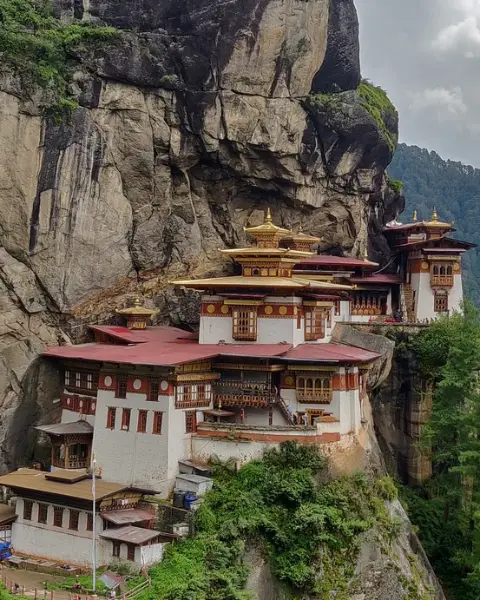
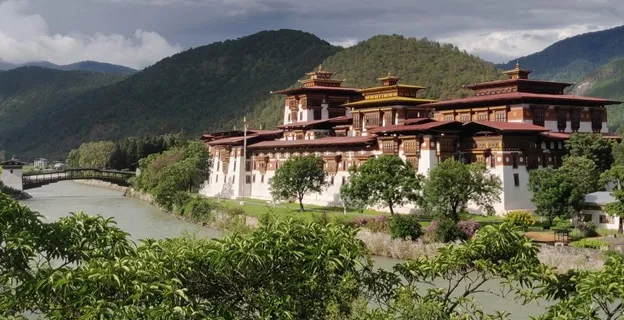
You can hike through pine forests to the legendary Tiger's Nest Monastery, walk through the streets of Thimphu, explore the magnificent Punakha Dzong, cross long suspension bridges, visit remote mountain valleys and experience traditional Bhutanese hospitality.
Beyond the famous sights, Bhutan rewards travellers who slow down.
Stay in a village homestay, soak in a traditional hot-stone bath, try your hand at archery, eat fiery Bhutanese cuisine, attend a local festival or simply spend an afternoon walking through a Himalayan valley.
Bhutan Travel Trips
Bhutan levies fees depending on the number of nights you plan to stay there and your home country. This fee is called the "Sustainable Development Fee," and it does not include any other expenses like accommodation or transport, or food For citizens of India - you need to pay Rs. 1200 (approximately 15 USD) per night. Before the pandemic, Indians were exempted from this fee. For citizens of Bangladesh & Maldives, you need to pay USD 100 per person per night, but the process of applying for a visa is both online or in person at the time of arrival. Before the pandemic, these nationals were also exempted from this fee. For citizens of all other countries worldwide, you must pay USD 100 per person per night to get the visa. And you must apply for the visa beforehand, either online or through a travel agency.
Key Details on Bhutan's SDF for Foreigners
Adult Rate: USD 100 per person per night for international visitors (excluding nationals from India who pay INR 1,200).
Children's Discount: Children aged 6 to 12 receive a 50% discount (USD 50 per night).
Infant Exemption: Children aged 5 and under are completely exempt from the fee.
Payment Process: The fee is paid in advance during the Official Bhutan Visa Application for the entire duration of your planned stay.
Purpose: Funds raised go toward environmental conservation, cultural preservation, and free healthcare and education for Bhutanese citizens
Places to Visit in Bhutan
Paro
Paro is often the first introduction to Bhutan for international visitors arriving by air.
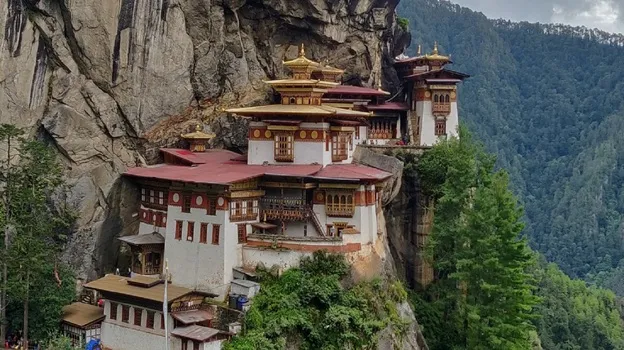
The valley is home to some of Bhutan's most famous cultural landmarks, including Paro Taktsang, or Tiger's Nest, perched dramatically on a cliff high above the valley.
Paro is also known for its traditional architecture, historic monasteries, colourful markets and beautiful mountain surroundings.
Thimphu
Thimphu, the capital of Bhutan, is a fascinating blend of tradition and modernity.
Explore the magnificent Tashichho Dzong, visit the giant Buddha Dordenma overlooking the valley, browse the local markets and discover Bhutanese arts and crafts.
Unlike many capital cities, Thimphu retains a relatively relaxed pace and remains closely connected to Bhutanese culture and traditions.
Punakha
Punakha is one of Bhutan's most beautiful valleys and was once the country's capital.
The spectacular Punakha Dzong, located at the confluence of the Mo Chhu and Pho Chhu rivers, is one of the finest examples of Bhutanese architecture.
The valley's warmer climate also makes it particularly attractive for agriculture, with rice fields, orchards and traditional villages spread across the surrounding landscape.
Phobjikha Valley
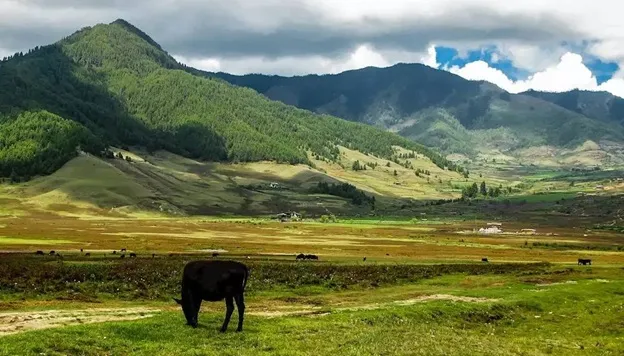
The broad, peaceful Phobjikha Valley is famous for its natural beauty and its population of black-necked cranes, which arrive from the Tibetan Plateau during winter.
The valley is also home to Gangtey Monastery and offers excellent opportunities for walking, birdwatching and experiencing rural Bhutan.
Bumthang
For travellers interested in Bhutan's spiritual and cultural heritage, Bumthang is particularly rewarding.
The region is home to ancient temples, monasteries and traditional villages spread across several beautiful valleys.
Bumthang offers a slower and more immersive experience of Bhutan, away from the country's better-known western destinations.
A trip to Bhutan requires two mandatory government charges: a one-time USD 40 visa fee and a Sustainable Development Fee (SDF) of USD 100 per person, per night, for most international visitors. On top of this, travelers pay separately for accommodation, meals, transport, and a licensed guide — Bhutan does not use an all-inclusive package system anymore. A 5% Goods and Services Tax on tourism services (not on the SDF itself) applies from January 1, 2026 onward. Budget travelers can expect a realistic daily cost of roughly USD 200–300 including the SDF, while luxury trips can run much higher.
2. What is the Sustainable Development Fee (SDF)?
The SDF is a mandatory daily fee charged to every international tourist as part of Bhutan's "High Value, Low Volume" tourism policy. It funds free healthcare and education, environmental protection, cultural preservation, and infrastructure development. The current rate of USD 100 per person per night applies from September 2023 through August 31, 2027, and is separate from accommodation, food, or guide costs.
3. Who is exempt or gets a discount on the SDF?
Children under 6 years old travel completely free of the SDF. Children aged 6 to 11 receive a 50% discount (USD 50/night). Indian nationals pay a much lower regional rate of INR 1,200 per person per night instead of the USD rate. Certain categories — such as diplomats on official business, some pilgrims, and MICE (Meetings, Incentives, Conferences, Exhibitions) participants — may qualify for waivers under specific government rules.
4. Do I need a visa to visit Bhutan?
Yes. All foreign tourists (except Indian nationals, who need only a permit) must obtain a visa before traveling, arranged through a Tourism Council of Bhutan-licensed tour operator or hotel — independent travelers cannot apply for a Bhutan tourist visa directly. The visa costs USD 40 and is processed alongside your SDF payment, typically taking about 5–7 working days. Approval arrives as an e-visa clearance letter, which you present when boarding your flight or crossing the land border.
5. Can I travel to Bhutan independently, without a guide?
No, for most of the country. Foreign tourists (excluding Indian, Bangladeshi, and Maldivian nationals in many cases) are required to book through a licensed Bhutanese tour operator and travel with a certified guide for the duration of their trip. This is a core part of Bhutan's controlled, high-value tourism model rather than a restriction on specific sites alone.
6. What is the best time of year to visit Bhutan?
Spring (March–May) and autumn (September–November) are considered the best seasons, offering clear mountain views, mild weather, and Bhutan's major festivals (tshechus), including the famous Paro and Thimphu festivals. Winter (December–February) brings colder temperatures but crisp, clear skies and fewer crowds, while the summer monsoon (June–August) brings heavy rain to most regions, though it's a good time for lush landscapes and fewer tourists in the east.
7. How do I get to Bhutan?
Bhutan is reachable almost exclusively by air, landing at Paro International Airport, the country's only international airport, served by Druk Air and Bhutan Airlines from cities including Delhi, Kolkata, Kathmandu, Bangkok, Singapore, and Dubai. Overland entry is also possible for travelers coming from India, through border towns such as Phuentsholing, Gelephu, or Samdrup Jongkhar.
8. What is the currency used in Bhutan, and can I use credit cards?
Bhutan's official currency is the Ngultrum (BTN), which is pegged 1:1 to the Indian Rupee, and Indian Rupees are widely accepted alongside it. Credit cards are accepted at larger hotels and shops in cities like Thimphu and Paro, but cash is essential in rural areas and smaller towns, so carrying Ngultrum or Indian Rupees is recommended.
9. What are the must-visit places in Bhutan?
Top destinations include Paro, home to the iconic Tiger's Nest Monastery (Paro Taktsang) perched on a cliffside; Thimphu, the capital city with its markets, dzongs, and the giant Buddha Dordenma statue; Punakha, known for its stunning riverside Punakha Dzong; and Bumthang, considered the spiritual heartland of Bhutan with its ancient temples and valleys.
10. Is Bhutan safe for tourists?
Yes, Bhutan is widely regarded as one of the safest countries in the world for travelers, with very low crime rates and a culture that places strong emphasis on hospitality and respect. Standard travel precautions apply, such as being cautious on mountain roads and acclimatizing properly to altitude in higher regions, but violent crime and theft against tourists are rare.
Bhutan Facts
Bhutan's main tourist hubs include the capital town of Thimphu and the beautiful city of Paro. Apart from these, Bhutan is known for its iconic Tiger's Nest Monastery, perched dramatically on a cliffside, and the Punakha Dzong, a majestic fortress with stunning architecture and many trekking routes.Bhutan is a unique country as it's the only country in the world that measures success in terms of Gross National Happiness, prioritizing the well-being of its citizens over material wealth. Because of this, Bhutan has attracted tourists from around the globe due to its warm hospitality and ever-smiling approach to guests.
How to Reach
By Air
Located in Paro district at a height of 7300 ft. above sea level, Paro International Airport is the nearest airport to Bhutan. It is the only airport to enter the country from India by air. People also take flights from Bagdogra airport near Siliguri, West Bengal.
By Train
Although, there are no direct rail routes to reach Bhutan from India, one can board a train from Hasimara station or New Alipurduar stations, which are 17 and 60 kilometers away from Phuentsholing, the border town of Bhutan. The other train station is at NJP New Jalpaiguri, Siliguri. From there one can drive to Phuentsholing 5 hours
By Road
Unlike other foreign countries, going to Bhutan by roadways from India is quite an easy task. There are only three land borders which are open for entry – Phuentsholing, Gelephu and Samdrup Jongkhar. It takes around three hours from Guwahati to Bhutan by road and same from Siliguri as well.