A Glimpse of Lepcha Festivals in Dzongu
Aug 8th, 2023


Log in to your Account
Share


Location: Tawang, Arunachal Pradesh, India | Altitude: 3,048 metres (10,000 ft) | Entry Fee: Free (Museum: ₹20–50)
Perched high in the mist-draped Eastern Himalayas, Tawang Monastery is one of those rare places that stops you mid-breath. Whether you're a spiritual seeker, a culture enthusiast, or simply someone who loves offbeat travel in Northeast India, this 340-year-old monastery delivers an experience that is as profound as the mountains surrounding it. This comprehensive travel guide covers everything — opening hours, taxi availability, best time to visit, festivals, history, and practical tips — so you can plan your visit with confidence.
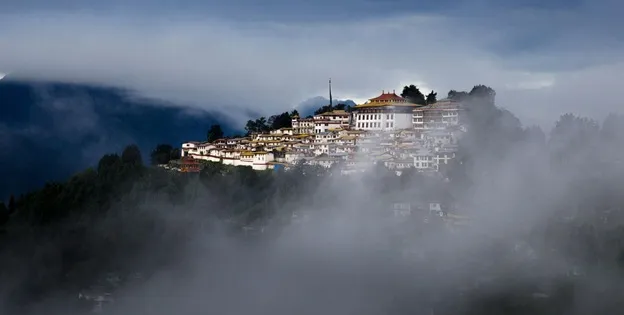
Tawang Monastery — known in Tibetan as Galden Namgyal Lhatse, meaning "the divine paradise of complete victory" — is the largest monastery in India and the second largest in the world, after the Potala Palace in Lhasa, Tibet. It sits at an elevation of roughly 10,000 feet in the Tawang district of Arunachal Pradesh, overlooking the sweeping Tawang Chu valley with its snow-capped peaks and deep gorges.
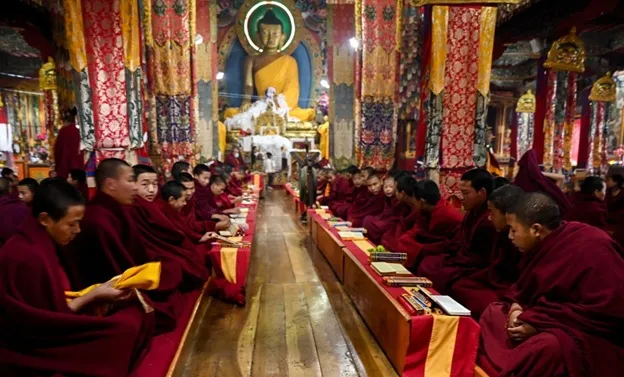
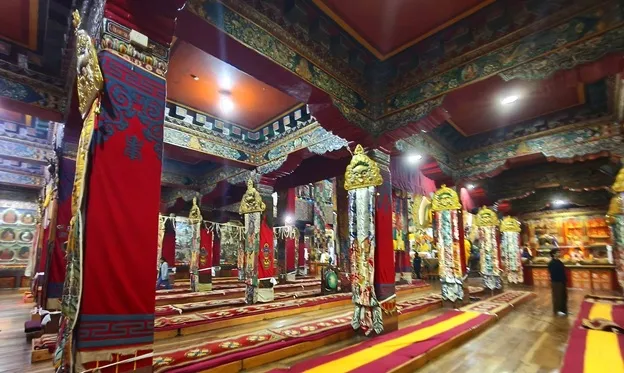
The monastery complex is a three-storey dzong-style structure enclosed by a 925-foot (282-metre) compound wall. Within its precincts are 65 residential buildings housing over 450 monks, a prayer hall (the Dukhang), a library holding ancient Kangyur and Tengyur scriptures, a museum, and an awe-inspiring 8-metre golden statue of Lord Buddha at the centre.
The very name "Tawang" carries a founding myth that has endured for centuries. "Ta" means horse and "wang" means chosen — together forming Tawang: the place chosen by the horse. The story goes that Merak Lama Lodre Gyatso, on a mission from the 5th Dalai Lama to establish a monastery in this region, struggled to find a suitable site. After intense prayer in a cave, he emerged to find his horse missing. He searched the mountains and found the horse grazing atop a peak called Tana Mandekhang — historically the palace of King Kala Wangpo. Taking this as divine guidance, he chose the site.
A second legend connects the name to Terton Pemalingpa, a renowned treasure-finder, who is said to have bestowed the "initiations" of Tamdin and Kagyad at this location — "Ta" being short for Tamdin and "Wang" meaning initiation.
The monastery was founded between 1680 and 1681 by Merak Lama Lodre Gyatso, in accordance with the explicit wishes of the 5th Dalai Lama, Ngawang Lobsang Gyatso, who also provided a ball of yarn to demarcate the monastery's perimeter. It belongs to the Gelug (Yellow Hat) school of Vajrayana Buddhism, founded by the great philosopher Je Tsongkhapa, and maintained a religious association with the Drepung Monastery of Lhasa for centuries.
The monastery was intentionally built like a fort. This was not a stylistic choice but a strategic one — the rival Nyingmapa (Black Hat) sect was dominant in the region, and the Drukpas of Bhutan, also Nyingmapa adherents, attempted to invade and seize control of Tawang. The fort-like structure provided both spiritual authority and physical defence.
In 1844, the monastery signed two agreements with the East India Company — one surrendering rights to the Karlapara Duar for an annual payment of ₹5,000, and another binding the Shardukpens to British administrative authority — marking the beginning of the colonial chapter in its history.
Tawang continued to be administered by Tibet well into the 20th century, despite the McMahon Line of 1914 technically placing it within India. In February 1951, Indian official Ralengnao Khathing led a mission that formally brought Tawang under Indian administration.
The monastery holds a deeply significant modern chapter: Tawang was the birthplace of the 6th Dalai Lama, Tsangyang Gyatso, born here in 1683. It is also the first Indian town that the 14th Dalai Lama reached on 31 March 1959 after his dramatic escape from Tibet across the Himalayas, spending several days at the monastery before reaching Tezpur.
During the Sino-Indian War of 1962, Tawang was briefly occupied by Chinese forces before China voluntarily withdrew its troops. The monastery survived this turbulent period intact and today remains a living, thriving institution — not a relic.
Conservation and restoration efforts have been ongoing, with the site recognised as a National Heritage Site. Over 450 monks reside and study here, and the monastery continues to be the spiritual heart of the Monpa community of Arunachal Pradesh.
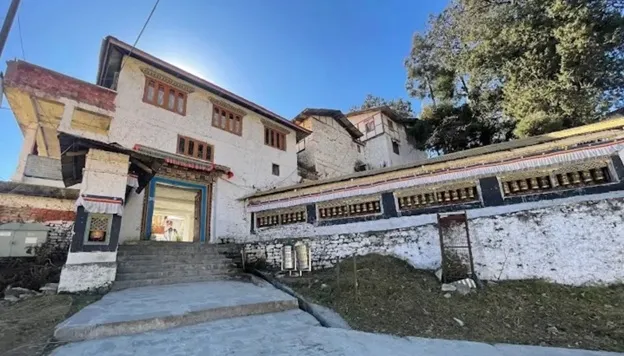
Monday–Sunday (Daily) 7:00 AM to 7:00 PM
The monastery is open every day of the week, including weekends and most public holidays. There is no mandatory entry fee to the main complex, though donations are warmly welcomed. The museum inside the monastery has a nominal entry fee of approximately ₹20–50 and may sometimes charge a small camera fee.
Pro Tip: Arrive early — by 7:30 AM if possible. The morning light on the monastery walls is spectacular, the monks are in active prayer, and the courtyard is peaceful before tourist groups arrive. Early risers also get a chance to witness the morning ritual activities up close.
Are There Dates When the Monastery Closes?
The monastery does not have fixed annual closure dates for visitors. However, there are a few situations to be aware of:
Private ceremonies for resident monks may occasionally limit visitor movement in specific sections. Always follow the instructions of monks and monastery staff.
Tawang has no airport. The nearest airports are:
Salonibari Airport, Tezpur (Assam) — approximately 320–380 km by road, the most commonly used.
Guwahati (Lokpriya Gopinath Bordoloi International Airport) — approximately 450 km, connected to most major Indian cities.
From Guwahati or Tezpur, the journey to Tawang is by road — a long, spectacular, and often adventure-filled drive through Bhalukpong, Bomdila, Dirang, Sela Pass (4,170 m), and finally Tawang. The recently inaugurated Sela Tunnel has significantly improved all-weather connectivity and reduced travel time.
Helicopter service: A bi-weekly helicopter service operated by the Arunachal Pradesh government runs from Guwahati, subject to weather and availability
The monastery is located approximately 2 km west of Tawang town centre. This is a short distance, but on mountain terrain.
Local taxis: Readily available in Tawang town; expect to pay ₹1,000–2,000 for a monastery trip depending on whether you hire for a full day of sightseeing.
Shared jeeps: Much cheaper at ₹100–300 per seat for local runs.
Bikes/scooters: Available for self-hire at approximately ₹300–500 per day for those comfortable on mountain terrain.
Local buses: Budget option at ₹20–50, connecting to nearby sites but less frequent.
Pre-booking during peak season (April–June and September–October) is strongly recommended, as demand for local taxis spikes considerably. Most Tawang hotels and homestays can arrange reliable taxi drivers.
Season-by-Season Breakdown:
Spring (March–May) — Highly Recommended
This is arguably the best time. Temperatures are pleasant (5°C to 18°C), the roads through Sela Pass are accessible, rhododendrons bloom in explosions of red and pink across the hillsides, and the skies are often clear. Ideal for photography, trekking, and sightseeing.
Summer (June–August) — Good, With Caveats
The monsoon affects parts of Arunachal Pradesh, occasionally causing landslides on the roads leading to Tawang. However, Tawang itself receives less rainfall than southern Arunachal, and the landscape turns a lush, vivid green. The Saka Dawa festival is celebrated in June.
Autumn (September–October) — Excellent
Crystal-clear skies, ideal photography conditions, and the famous Tawang Festival in October make this a superb time to visit. Temperatures are mild and roads are in their best condition before the onset of winter.
Winter (November–February) — For the Adventurous
The mercury drops sharply (0°C to -10°C at night), and snowfall is common. The road over Sela Pass can be snowbound, though the Sela Tunnel has mitigated much of this. The reward? The Torgya Festival in January and Losar in February–March — the most spectacular cultural experiences the monastery offers. If you can handle the cold, this is unforgettable.
This is the most significant and exclusive festival of Tawang Monastery, celebrated according to the Buddhist lunar calendar on the 28th to 30th of Dawachukchipa — typically falling in January (around the 10th to 12th in the Gregorian calendar, though dates shift annually; in 2026, it fell approximately January 28–30).
The three-day festival has been observed since the monastery's inception and is rooted in the purpose of driving away evil spirits, disease, and calamities to usher in a prosperous new year. The rituals begin with three days of prayers in the main temple, starting from the 26th day of the 11th lunar month.
On the evening of the first day, the Torma (a sacred sacrificial cake) is taken in a ceremonial procession to the southern gate of the monastery, where the "Torgya" — the casting and burning of the Torma — is performed, symbolising the destruction of all evil. On the second day, monks perform spectacular Cham dances in full costume in the monastery courtyard, donning elaborate masks including the famous Pha-Chham, the pig-masked dance. On the final day, the abbot of the monastery bestows a vase initiation upon the assembled devotees.
Every third year, the festival is celebrated on a grander scale as Dung-Gyur, during which monks conduct the sacred Mani Dung Drub ritual.
Losar, derived from the Tibetan "Lo" (year) and "Sar" (new), is the Tibetan Lunar New Year and the most important festival for the Monpa community. It typically falls in late February or early March, lasting approximately 15 days.
The monastery becomes a hub of spiritual energy — monks perform prayers, chant mantras, and light butter lamps. Traditional Monpa food plays a central role: Guthuk (a soup made with nine ingredients symbolising abundance), Khapsey (deep-fried pastries), and local barley beer are shared among families and visitors. Community visits, gift exchanges, and vibrant dances reaffirm both spiritual faith and social bonds.
Saka Dawa honours the attainment of Nirvana by Gautama Buddha. Celebrated during the fourth month of the Tibetan lunar calendar (typically June), it is marked by paying homage to the Buddha, circumambulating the monastery, and acts of merit and compassion. A quieter, more contemplative festival — ideal for those seeking a spiritual rather than spectacle-driven experience.
This religious procession festival, organised during the seventh month of the lunar calendar (a period of minimal agricultural activity), involves monks carrying sacred texts including the Nyi-Thri, Gyur, Bum, and Gye-Tong in a blessing march through the region. The procession is believed to bless newly sown crops and is a wonderful insight into the intertwining of monasticism and agrarian life in the Monpa world.
Dances and ceremonial celebrations are held in the monastery courtyard on the night of Buddha Purnima — the full moon commemorating the birth, enlightenment, and death of the Buddha. A deeply moving spectacle under open Himalayan skies.
Organised by Arunachal Pradesh tourism, the Tawang Festival in October is a broader cultural celebration showcasing Monpa dances, traditional attire, music, local crafts, and cuisine. While it is partly a tourism event, it remains an authentic window into the living culture of the region and draws large numbers of visitors.
This festival honours the Buddha's descent from the Tushita heaven after teaching his mother. Observed through chanting, offerings, and meditative rituals in monasteries across Tawang, it is one of the four great Buddhist commemorations of the year.
1. Inner Line Permit (ILP) is Mandatory
All Indian citizens require an Inner Line Permit to enter Arunachal Pradesh. This can be obtained online through the Arunachal Pradesh government's official tourism portal (arunachaltourism.com) or from Arunachal Pradesh liaison offices in Guwahati, Tezpur, Kolkata, and New Delhi. The fee is approximately ₹100–400. Foreign nationals require a Protected Area Permit (PAP), which must be obtained through a registered tour operator and requires travelling in a group of at least two.
Apply well in advance — especially for festival periods when the offices are busier.
2. Altitude Acclimatisation is Essential
Tawang sits at over 3,000 metres. If you are coming directly from the plains, the rapid altitude gain (especially crossing Sela Pass at 4,170 m) can cause altitude sickness. Symptoms include headache, nausea, dizziness, and fatigue.
3. Dress Respectfully
The monastery is an active place of worship. Dress modestly — cover shoulders and knees. Carry a light shawl or scarf. Remove footwear before entering prayer halls. Loud voices, disruptive photography, and disrespect during rituals are deeply unwelcome.
4. Photography Etiquette
Photography in the outer courtyards is generally permitted. Inside the prayer halls and during ceremonies, always ask for permission first. A small camera fee may be charged. Never photograph monks without consent. Flash photography near sacred thangkas and murals can cause damage and is typically prohibited.
5. Road Conditions Can Be Challenging
The road to Tawang, while vastly improved with the Sela Tunnel, still involves narrow mountain stretches. Travel during daylight hours. If roads are snowbound or there has been heavy rain, delay your journey — never press through uncertain road conditions in these mountains.
6. Carry Cash
Tawang has limited ATM facilities and network connectivity can be unreliable. Carry sufficient cash for accommodation, food, local transport, and shopping.
7. Book Accommodation Well in Advance During Festival Season
During Torgya (January), Losar (February–March), and the Tawang Festival (October), accommodation fills up fast. Book at least 4–6 weeks in advance. You can check and book homestay in Tawang through OurGuest
8. Leave No Trace
The monastery and its surroundings are a sacred, ecologically sensitive environment. Carry your waste back. Do not litter on monastery grounds or the surrounding hills.
Q: What is the entry fee for Tawang Monastery?
There is no mandatory entry fee for the main monastery complex. Donations are appreciated. The museum inside charges approximately ₹20–50.
Q: Is Tawang Monastery open on all days of the week?
Yes. The monastery is open every day from 7:00 AM to 7:00 PM, including Sundays and public holidays.
Q: Do I need a permit to visit Tawang?
Yes. Indian citizens need an Inner Line Permit (ILP). Foreign nationals need a Protected Area Permit (PAP) through a registered tour operator.
Q: How far is the monastery from Tawang town?
The monastery is approximately 2 km west of Tawang town centre, easily reachable by local taxi or shared jeep.
Q: Can I attend the morning prayer sessions?
The monastery opens at 7:00 AM, and morning prayers are often in progress. Respectful visitors may observe from designated areas.
Q: How long should I spend at the monastery?
Most visitors spend 2–3 hours to explore the prayer halls, museum, courtyards, library exterior, and soak in the views. If attending a festival, plan for a full day.
Q: Is Tawang safe to visit?
Tawang is extremely safe for tourists. The local Monpa community is warm and welcoming. As with any high-altitude, remote destination, prepare thoroughly for the journey and weather.
Q: What is the best month to attend the Torgya festival?
Torgya falls in January (exact dates vary each year based on the Tibetan lunar calendar; in 2026, it was around January 28–30). Check with local tourism authorities or the monastery for the specific dates each year.
Q: Are there homestay options near the monastery?
Yes. Tawang has a growing number of homestays run by local Monpa families, which offer an authentic cultural experience alongside accommodation. Platforms like OurGuest.in list curated homestays across Northeast India, including in the Tawang region.
Q: What should I not miss near Tawang Monastery?
While in the area, also visit Urgelling Monastery (birthplace of the 6th Dalai Lama, 5 km away), the Tawang War Memorial, Sela Pass, PTSO Lake, Bum La Pass (permit required), and the Chumi Gyatse waterfalls. A day trip to Zemithang valley is also highly recommended for its pristine offbeat experience.

Written by Omanso Tayang
Omanso, an avid backpacker with an engineering background from Itanagar, Arunachal Pradesh, returned to his home state after completing his education in Chennai & NERIST. Passionate about promoting the lesser-known destinations, Oman has traveled across most parts of Arunachal to find unique locations like Anini, Dong Valley, Namsai etc. When not exploring, Oman enjoys camping, trekking, dancing and going on culinary adventures.
For a customized Tawang Arunachal Pradesh Tour experience you can contact us at +91-7669503993 or email to contact@ourguest.in