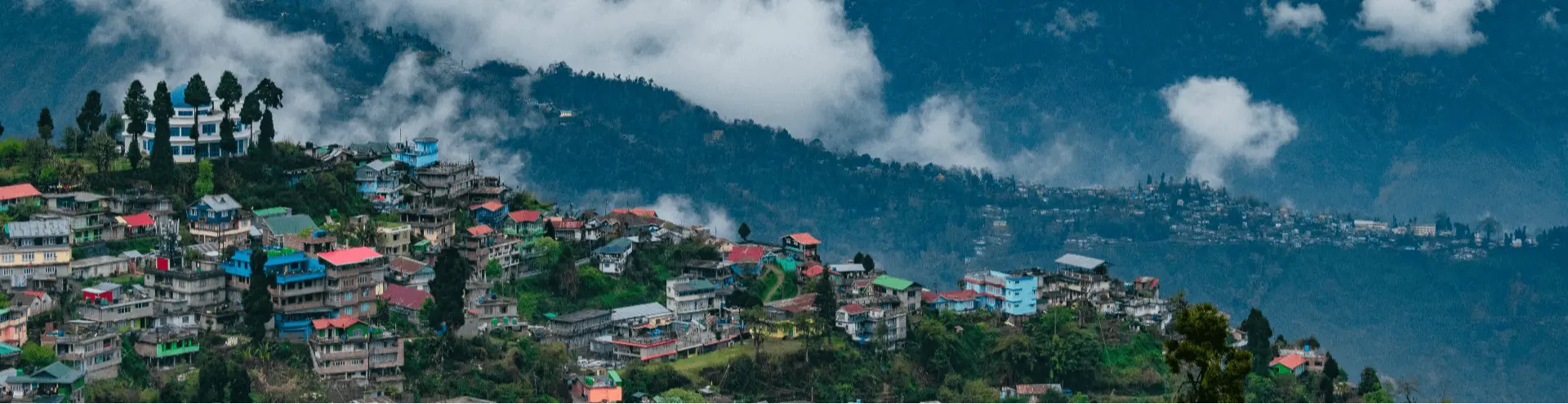
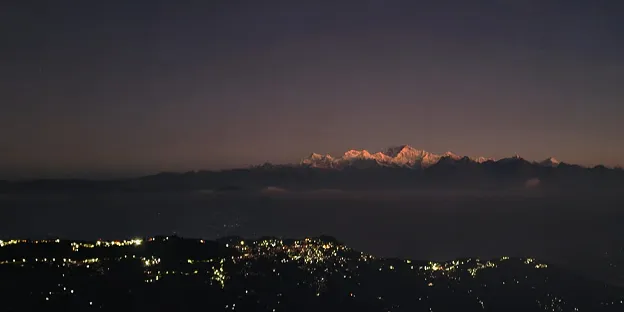
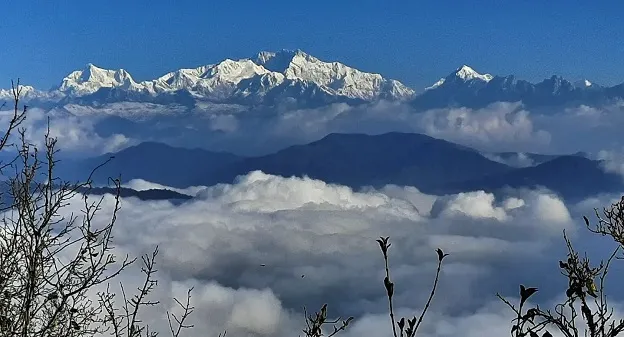
Sprawled over a steep mountain ridge and dotted with unending stretches of emerald green tea plantations, the quaint hill station of Darjeeling, in West Bengal, is a popular travel destination. Darjeeling was once a summer resort for the British Raj elite and many parts of the town still boasts remnants of colonial-era architecture that exude a charm of their own. Darjeeling is famed for the distinctive black tea grown on plantations that dot its surrounding slopes. It's backdrop is Mt. Kanchenjunga, among the world’s highest peaks. Darjeeling is very popular amongst travellers both from India and abroad and there are many interesting things and places to visit in Darjeelingwhich travellers can explore in & around Darjeeling.
Darjeeling Travel Trips
Carry warm jackets, gloves and thermals, especially if you plan to visit in winter season.
Walking shoes are a must, since the best way to see the city is by walking.
Do visit mall road road and try different food & drinks.
Darjeeling can be quite crowded during peak tourist seasons, so it maybe a good idea to leave your taxi or self driven vehicle at the hotel and explore the main city on foot.
Witnesspanoramic views of the Himalayan peaks such as the Kanchenjunga range, Makalu, Everest, Lhotse, Janu, Chamlang, Baruntse when you trek to Sandakphu (the highest peak in West Bengal)
Visit the Padmaja Naidu Himalayan Zoological Park:
Home to rare Himalayan animals like the Red Panda and Snow Leopard.
Enjoy a leisurely walk through tea gardens:
Immerse yourself in the serene beauty of Darjeeling's famous tea plantations.
Explore Ghoom Monastery:
One of the oldest Buddhist monasteries in Darjeeling, with stunning Tibetan artifacts.
Visit the Himalayan Mountaineering Institute:
Learn about the history of mountaineering and explore the museum.
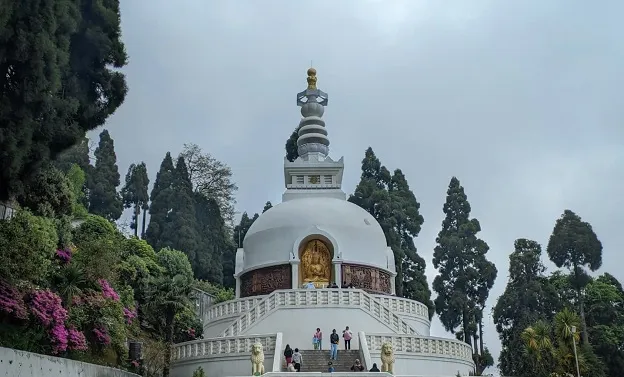
Discover the Japanese Peace Pagoda:
Find inner peace at this serene spot offering panoramic views.
Shop for local handicrafts and tea:
Darjeeling is famous for its woolen items and of course, tea!
Enjoy a cup of Darjeeling tea:
No visit to Darjeeling is complete without indulging in the world-famous tea.
Explore local markets:
Discover hidden gems and bargain for souvenirs especially in Mall Road.
Savor local cuisine:
Try delicious momos, thukpa, and other Himalayan delicacies.
Best time to visit Darjeeling:
Best time to visit Darjeeling would be in the months of March to June for pleasant weather and vibrant scenery, or October to November for clear views. Winter can be enchanting but requires preparation for cold temperatures. During monsoons, the roads can be disrupted but you also get the benefit of lesser crowds (which can be a big factor in a small town).
Where to stay in Darjeeling:
There are some really good hotels in Darjeeling including Elgin Heritage Resort, Windamere Hotel, etc. At the same time, if you have a lesser budget, there are some really nice homestays in Darjeeling where you can stay and get a glimpse of the local life in Darjeeling.
The best time to visit Darjeeling is March to May (spring) and October to November (autumn), when skies are clearest and Kanchenjunga is most visible. Spring brings blooming rhododendrons and temperatures of 10–20°C, while autumn offers crisp air, temperatures of 10–15°C, and the clearest post-monsoon mountain views. Avoid June to September, the monsoon season, when heavy rain increases the risk of landslides and fog often hides the peaks.
2. Do I need a permit to visit Darjeeling?
No permit is required to visit Darjeeling itself since it's part of West Bengal, India, and open to domestic and foreign tourists alike. However, permits are needed if you continue on to nearby Sikkim (an Inner Line Permit for Indian nationals, a Protected Area Permit for foreign nationals) or if you trek into Singalila National Park toward Sandakphu, where a forest entry permit is mandatory.
3. How do I reach Darjeeling?
The nearest airport is Bagdogra Airport (IXB), about 70 km away (roughly 3 hours by road), and the nearest major railway station is New Jalpaiguri (NJP). From either point, you can hire a shared or private taxi up into the hills. For a classic approach, travelers can also ride the historic Darjeeling Himalayan Railway from NJP, though this full journey takes 7–8 hours and is better suited to slow-travel itineraries than a quick transfer.
4. What is the Darjeeling Toy Train and is it worth doing?
The Darjeeling Himalayan Railway, nicknamed the "Toy Train," is a UNESCO World Heritage Site and one of the town's signature experiences. Most visitors take the popular Joy Ride, a roughly 2-hour round trip from Darjeeling to Ghum and back, which includes a stop at the scenic Batasia Loop and the DHR Railway Museum. Steam-hauled heritage rides on vintage "B-Class" locomotives are also available for a more nostalgic experience.
5. How many days are enough to explore Darjeeling?
3 to 5 days is generally enough to cover Darjeeling's main sights comfortably, including Tiger Hill, the Toy Train, monasteries, tea gardens, and the local markets. If you plan to combine the trip with nearby Gangtok or Sikkim, extend your itinerary to 5–7 days to account for permits and mountain travel time.
6. What is the best time to see sunrise at Tiger Hill?
Tiger Hill is best visited at dawn, year-round, arriving by around 4:00 AM to secure a good viewing spot before sunrise over Kanchenjunga. Visibility is highest in winter and early spring (December–March), when the air is driest, though monsoon months (July–September) often produce complete fog-outs with little to no view.
7. Is Darjeeling safe for tourists, including solo and female travelers?
Yes, Darjeeling is generally considered safe for tourists, including solo and female travelers, with a low-key, walkable hill-town atmosphere. The main precautions relate to weather and terrain rather than crime: check road conditions during monsoon season, as landslides can disrupt routes from Siliguri, and dress in layers since evening temperatures drop quickly even in warmer months.
8. What should I pack for a Darjeeling trip?
Pack layered clothing, since mornings and evenings are cold year-round even when afternoons feel mild — a light jacket suffices in spring and autumn, while heavier woolens are needed from November through February. Add comfortable walking shoes for hilly terrain, a light rain shell if visiting between June and September, and sun protection for high-altitude UV exposure.
9. Can I trek from Darjeeling, and where does the Sandakphu trek start?
Yes, Darjeeling is a popular base for Himalayan trekking, most notably the Sandakphu trek through Singalila National Park, which offers views of four of the world's five highest peaks — Everest, Kanchenjunga, Lhotse, and Makalu — on clear days. Trekkers need a forest permit, are usually required to hire a registered local guide, and should plan for cold conditions since Sandakphu sits at 3,636 m and can see snow even outside peak winter.
10. Does it snow in Darjeeling town?
Darjeeling town itself rarely receives snowfall, even though winter temperatures can drop to around -2°C at night. Snow is more reliably found at higher-elevation points nearby, such as Sandakphu (3,636 m), making Darjeeling a cold but not typically snowy hill station.
Darjeeling Facts
Located in the Eastern Himalayas, Darjeeling has an average elevation of 2,045 metres (6,709 ft).
The tea industry and tourism are the mainstays of the town's economy.
The population of Darjeeling meanwhile has exploded over the years, traffic congestion and water shortages are common.
Darjeeling has two peak tourism seasons, October to November and April to June.
How to Reach
By Air
The nearest airport to Darjeeling is Bagdogra which is approximately 95 km away from the city. From the airport, one can reach the city by hiring taxis. It will take almost 3 hours to reach Darjeeling from the airport.
By Train
The nearest railway station to Darjeeling is New Jalpaiguri which connects the city with all the major parts of the country. People can hire private or shared cabs from the station to reach Darjeeling which is about 3 hours journey.
By Road
Darjeeling is well connected to some of the major cities closeby such as Gangtok and Kalimpong which are located at a distance of 100 km and 51 km respectively. The city is also connected with Kolkata which is 651 km away and it takes around 14 hours to reach here.