Mawsynram, Meghalaya: Travel Guide to the Wettest Place on Earth
Mawsynram is much more than a place famous for rain. Located in the East Khasi Hills of Meghalaya, around 61 km from Shillong, this remote highland region is a fascinating combination of caves, waterfalls, fossil-rich landscapes, dramatic cliffs, forests, rock formations and traditional Khasi villages.
For many travellers, Mawsynram is still best known as one of the wettest places on Earth. But come here and you will discover that the rain is only part of the story.
The surrounding landscape has been shaped by millions of years of geological activity and extraordinary rainfall. There are enormous sandstone caves, ancient marine fossils embedded in rocks, deep ravines, natural pools and waterfalls that become spectacular during the monsoon.
And unlike the more heavily visited tourist circuit around Sohra (Cherrapunji), Mawsynram offers a quieter and more immersive experience.
Why Visit Mawsynram?
Mawsynram is particularly appealing if you enjoy nature, hiking, caves, geology and offbeat destinations. It is a landscape of caves, rock formations, waterfalls and fossil-rich terrain, rather than merely a rainfall destination.
Some of the highlights include:
Krem Puri, one of the world's longest sandstone cave systems
Mawjymbuin Cave, famous for its unusual limestone formations and religious significance
Mawlyngbna, known for fossils, water activities and spectacular views
Ancient marine fossils embedded in the surrounding rocks
Waterfalls and mountain streams
Forest trails and natural pools
Dramatic views towards the plains of Bangladesh
Khasi villages and community-run homestays
Birdwatching and nature walks
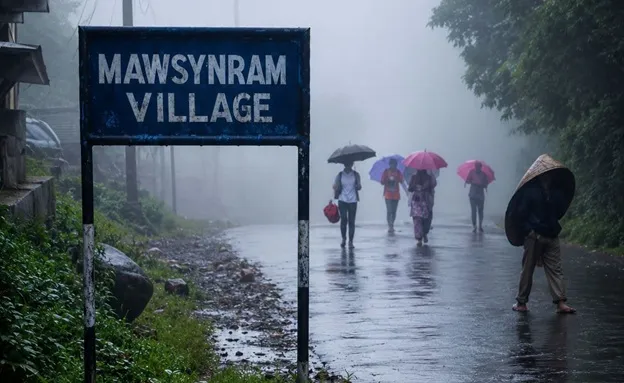
Mawsynram – The Wettest Place on Earth
Mawsynram has become synonymous with extreme rainfall.
The region receives more than 11,800 mm of rain annually on average, according to Meghalaya Tourism. A remarkable 1,003 mm of rain was recorded in a single day on 17 June 2022.
This extraordinary rainfall has shaped almost everything about the landscape.
Water has carved through sandstone and limestone, creating caves, ravines and underground passages. Streams tumble down the hillsides, while moss, ferns and other vegetation thrive in the extremely wet environment.
This is why monsoon is actually one of the most fascinating times to visit Mawsynram if your objective is to experience its rain and waterfalls.
But if you want to explore caves and undertake longer hikes, the drier months are considerably more comfortable.
Mawsynram Travel Trips
Best Places to Visit in Mawsynram:
1. Krem Puri Cave
If you are interested in adventure and geology, Krem Puri should be at the top of your Mawsynram itinerary.
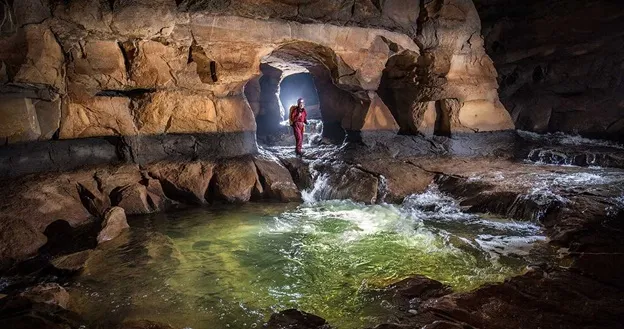
The cave extends for approximately 24.5 km, making it the longest known sandstone cave in the world, according to Meghalaya Tourism.
Unlike a conventional tourist cave, Krem Puri is a complex underground network of passages, chambers and narrow sections.
Getting to the entrance itself involves a descent from Laitsohum village.
Important - Krem Puri is not a commercial tourist cave.
Do not attempt to explore it independently. Meghalaya Tourism specifically states that a local guide is required for entry and navigation, given the complexity of the cave system.
If you are planning a serious caving experience, arrange a local guide and appropriate equipment in advance.
2. Mawjymbuin Cave
Located close to Mawsynram town, Mawjymbuin Cave is probably the easiest cave experience to include in a Mawsynram itinerary.
The cave is particularly famous for its distinctive rock formations and its religious significance.
A stairway leads down towards the cave entrance, making it considerably more accessible than Krem Puri.
The cave is associated with a naturally formed stalagmite resembling a Shiva Lingam, which has made Mawjymbuin an important religious site as well as a tourist attraction.
The official Meghalaya Tourism publication describes the cave as one of the best-known caves in the region because of its religious significance.
Mawlyngbna is one of the places I would strongly recommend adding to a Mawsynram itinerary.
Although technically a separate village and destination, it fits naturally into a Mawsynram trip.
Mawlyngbna is known for:
Ancient marine fossils
Rock formations
Umkhakoi Reservoir
Water activities
Hiking
Natural pools
Panoramic views towards Bangladesh
The area is fossil-rich, with water activities around Umkhakoi Lake and geological attractions.
If you have time, spending a night around Mawlyngbna rather than trying to cover everything as a day trip can make the experience considerably more relaxed.
4. Mawsynram Fossil Hike
This is one of the more interesting experiences in the region and deserves more prominence on the OurGuest page.
The Mawsynram Fossil Trail takes visitors through ravines and caves containing ancient marine fossils.
The trail begins around Janiaw village and passes through geological formations created by tectonic activity. It also offers views of Weikynmei waterfall and eventually reaches natural pools.
The hike is moderate difficulty and local guides are recommended because mobile connectivity is limited in parts of the trail.
This is a particularly good experience for travellers who want something beyond the usual Meghalaya waterfalls-and-viewpoints itinerary.
5. Crevice Walk
Another unusual experience around Mawsynram is the Crevice Walk.
The route takes you through narrow natural crevices, forests and rock formations, with roots, orchids and water-carved formations along the way.
The landscape is very different from the usual tourist trails around Sohra.
During the wetter months, the vegetation becomes particularly lush and streams and natural pools appear along the route.
A local guide is recommended, particularly because some trails can be difficult to navigate independently.
6. Lum Symper
Lum Symper is another interesting stop around Mawsynram.
The hill offers views across the surrounding landscape and is also associated with caves and unusual geological formations.
It is a good option for travellers who want a relatively short nature walk rather than a full-day trek.
7. Waterfalls Around Mawsynram
Mawsynram's extreme rainfall means that waterfalls are an integral part of the landscape.
During the monsoon, streams that may be relatively modest during the dry season can transform into powerful cascades.
One of the attractions highlighted by Meghalaya Tourism is Weikynmei waterfall, which can be viewed from the fossil-hike route.
If waterfalls are your priority, June to September is the most dramatic period—but you should also expect slippery trails, heavy rain and possible road disruptions.
Mawsynram During the Monsoon
If you want to experience Mawsynram at its most dramatic, visit during the monsoon.
The rain is not simply something to tolerate here—it is part of the attraction.
Mawsynram in monsoon is ideal for the rain experience, but not necessarily for every outdoor activity.
Best Time to Visit Mawsynram
There isn't really one "best" time for everyone.
It depends on what you want to do.
June to September – Experience the Rain
Come during the monsoon if you want to see:
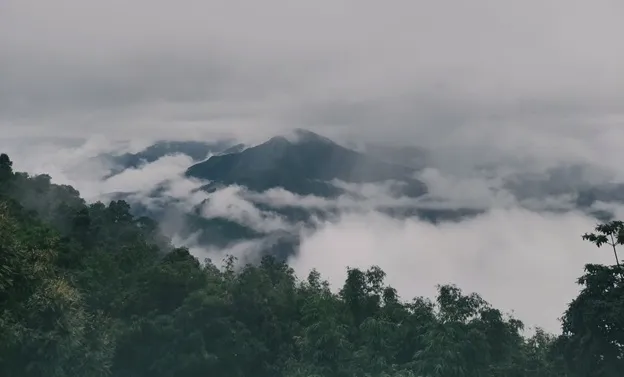
Waterfalls at their fullest Misty landscapes Lush green forests Dramatic rainfall
This is the season when Mawsynram truly lives up to its reputation.
October to November – Best for Exploration
After the monsoon, the landscape remains green while the weather becomes more comfortable.
This can be a particularly good period for:
Hiking Sightseeing Cave exploration Photography Village walks December to February – Clearer & Cooler
Winter generally offers clearer conditions and comfortable hiking weather, although temperatures can become quite cool.
March to May
The landscape begins transitioning towards the pre-monsoon period. Some trails and waterfalls may be less dramatic than during the monsoon.
How Many Days Do You Need in Mawsynram?
You can technically visit Mawsynram as a day trip from Shillong.
But I wouldn't recommend it if you want to experience the destination properly.
A day trip allows you to see a couple of attractions, but the more interesting experiences—such as fossil hikes, cave exploration, village walks and nature trails—need more time.
One night is good for:
Mawjymbuin Cave Mawsynram town One or two nearby attractions
Stay for at least one night if you are already travelling to Mawsynram.
Where to Stay in Mawsynram
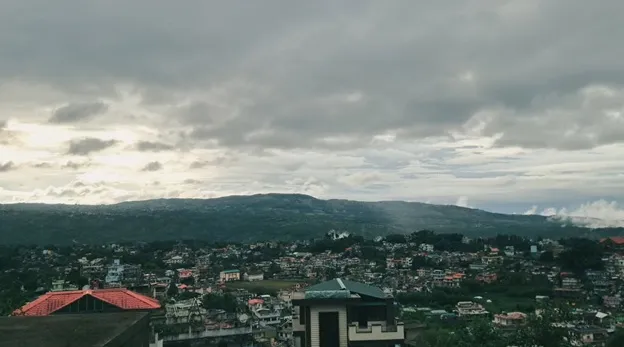
Mawsynram is not a conventional hotel destination. Accommodation is predominantly homestays, community lodges and small local properties.
This is actually part of its appeal.
Staying locally means you get to experience the villages and landscapes rather than simply visiting Mawsynram as a sightseeing stop from Shillong.
Some of the current accommodation options in Mawsynram include:
Wansa-Naki Homestay Emily And Sankrita Homestay A & R Homestay Mar-Ïa Homestay Sunset View Resort
Places to eat in Mawsynram:
There aren’t many big restaurants in Mawsynram. However, you can try the local cuisine at one of the smaller eateries. Also, with tourism evolving at a rapid pace, you can expect a few restaurants to open soon. A couple of places to consider are: - Sincera Restaurant for local food - Rit Mawksir Café and Lodge
Things to Know Before Visiting Mawsynram
Carry rain protection: Even if the forecast suggests only light rain, weather can change quickly. A proper rain jacket is much more useful than a small umbrella.
Wear shoes with good grip: This is particularly important during the monsoon.
Don't explore caves alone: This is especially important for Krem Puri. Meghalaya Tourism explicitly recommends a local guide.
Carry cash: Connectivity and digital payment facilities can be inconsistent in remote areas. Mobile network can be limited
Don't try to cover everything in one day: Mawsynram's attractions are spread across the surrounding countryside.
A slower itinerary will allow you to experience the area rather than simply tick off viewpoints.
Suggested Mawsynram Travel Itinerary:
2 Days / 1 Night
Day 1 – Shillong → Mawsynram
Morning departure from Shillong.
Visit:
Lum Symper Mawjymbuin Cave Mawsynram town
Check into your homestay.
Spend the evening exploring the village or simply enjoy the surrounding landscape.
Day 2 – Mawsynram → Shillong
Start early.
Depending on the season and weather, choose one experience:
Option 1: Fossil hike
Option 2: Mawlyngbna
Option 3: Krem Puri with a local guide
Return to Shillong in the evening.
3 Days / 2 Nights
For travellers who want to explore Mawsynram properly:
Day 1
Shillong → Mawsynram Mawjymbuin Cave + local village
Day 2
Krem Puri / Fossil Hike
Day 3
Mawlyngbna → Shillong
This gives you a much better sense of the region.
Frequently Asked Questions About Mawsynram
Is Mawsynram really the wettest place in the world?
Mawsynram is internationally renowned for its extreme rainfall and is described by Meghalaya Tourism as the world's wettest place. The region receives more than 11,800 mm of average annual rainfall.
Is Mawsynram worth visiting?
Yes, particularly if you enjoy caves, hiking, geology, waterfalls and less-touristy destinations. Mawsynram offers considerably more than its famous rainfall record.
How far is Mawsynram from Shillong?
Mawsynram is approximately 61 km from Shillong.
Can Mawsynram be visited as a day trip from Shillong?
Yes, but an overnight stay is better if you want to explore the caves, fossil trails and surrounding villages.
What is Mawsynram famous for?
Mawsynram is best known for its extraordinary rainfall, but the region is also known for Krem Puri, Mawjymbuin Cave, fossils, waterfalls, rock formations and hiking trails.
Is Krem Puri safe for tourists?
Krem Puri should not be explored independently. It is not a commercial tourist cave and a local guide is required for entry and navigation.
When is the best time to visit Mawsynram?
Visit during June–September if you specifically want to experience the rain and waterfalls. For hiking and cave exploration, the post-monsoon and drier months are generally more practical. Meghalaya Tourism specifically identifies post-monsoon and winter as good periods for hiking.
Is one day enough for Mawsynram?
A day is enough for a quick introduction, but one or two nights are preferable if you want to explore the region's trails, caves and villages.
For a customized Offbeat Meghalaya tour experience you can contact us at +91-7669503993 or email to contact@ourguest.in
Mawsynram Facts
It is reportedly the wettest place on Earth, with an average annual rainfall of 11,872 millimetres (467.4 in),Mawsynram received 745.2 mm of rainfall on 19 August 2015, probably the highest rainfall received by the town in recent times.On 17 June 2022, Mawsynram set a new record by receiving 1003.6 mm in a span of 24 hours which has now become its highest single day record for the month of June and for its all time single day record beating its former record of 944.7 mm on 7 June 1966.
How to Reach
By Air
The Umroi Airport in Shillong is the nearest airspace from Mawsynram and is situated around 86 km from the town. Private taxis and buses are available for Mawsynram from the airport with a picturesque road trip that will keep you enthralled for the 3-hour journey. Travellers may also fly into Lokpriya Gopinath Bordoloi Airport in Guwahati, Assam, instead of Shillong for more options with direct flights across the country, which is located 170 km – around 5 hours – away.
By Train
The Guwahati Railway Station is the closest railway line from Mawsynram and is situated about 150 km away. Travellers can get buses and cars from the railway station to cover the 4-hour journey to Mawsynram.
By Road
Mawsynram is well-connected to Guwahati, Shillong and Cherrapunji via road networks. Guwahati is 150 km away with easy access to buses, jeeps and private cars; the same applies to Shillong that is located just over 2 hours away at a distance of 60 km. Travellers from Cherrapunji will need to take a detour at Mawngap en route to Shillong; the distance is about 80 km and it takes just under 3 hours to reach Mawsynram.